When Church Testimonies Stay in One Language, the Story Never Lands
The sermon ends. A member walks to the microphone. She tells the story the church asked her to tell: how she came to faith, what the diagnosis did to the household, why baptism this Sunday is not a formality. The room leans in. In the third row, the grandmother who followed the homily on her phone is looking at a blank screen. Translation stopped when the preacher sat down. Three minutes later the congregation says amen. Half of them heard a person. The rest heard that belonging is for people who already speak the pulpit language.
This is not a setup tutorial. It is the Sunday problem churches create when they treat live sermon translation as the whole spoken hour. Testimony time is still public speech. It is often the speech people remember.
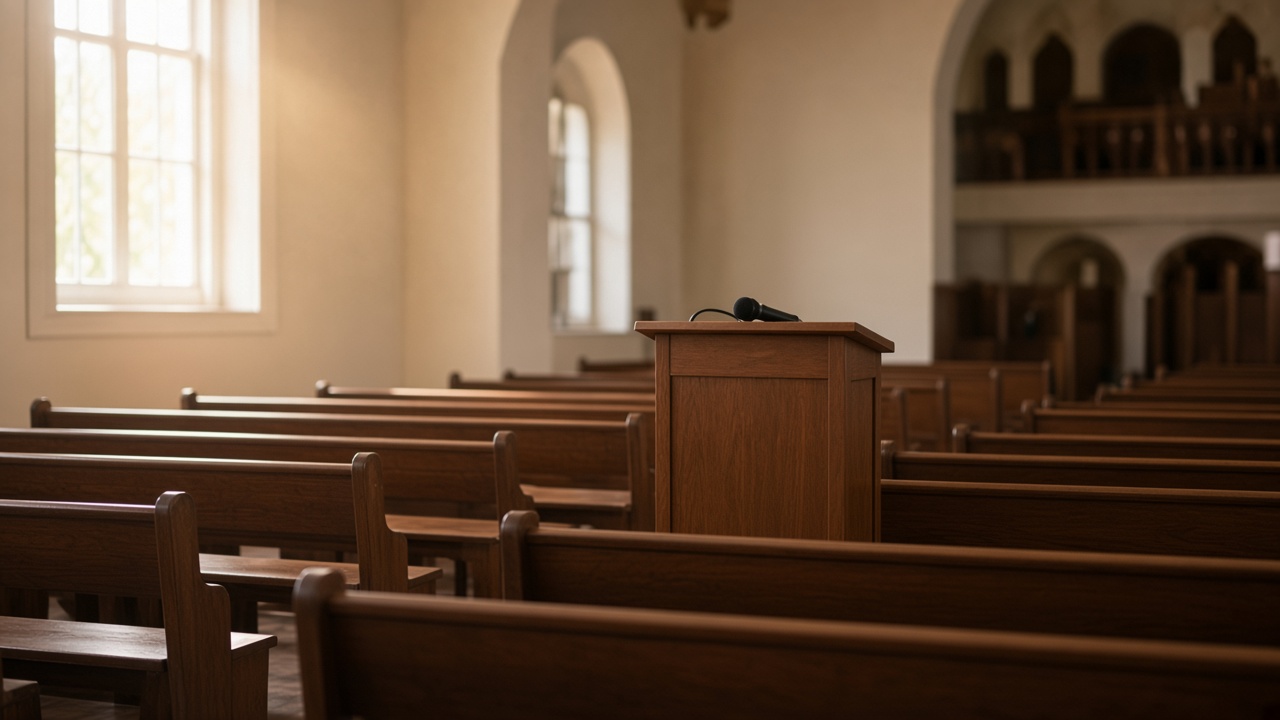
The story is the hour people actually keep
Leaders plan language around the manuscript. That is understandable. The sermon has a clock, a microphone, and a budget line. Sharing time looks like a bonus: five minutes, one volunteer, maybe a baptism Sunday or a missions report. It is also the most human speech in many services. Visitors who will not remember the outline will remember whether a real person became intelligible.
A mixed-language household feels the gap immediately. The teenager who thinks in English is fine. The parent who needed captions for the homily needed them for the story too. If the overlay is off, the family that sat together for the message splits in the same pew: one person receiving a life, the others waiting politely. First-time guests who cannot follow the hour rarely come back. A testimony they could not follow is the same test with a name attached.
Picture an English-speaking suburban church—an example, not a customer story. Spanish audio ran for the sermon. A Korean-speaking grandmother kept the phone in her lap. Then the host stopped translation because “the message is over.” A member shares in English about a hospital waiting room. The grandmother puts the phone away. She is still in the building. She is not in the story.
Two failures, same pew
Churches usually miss testimony time in one of two ways. Both look like hospitality from the platform.
The English story with no overlay. The preacher was translated. The member was not. Sometimes the session is still open and nobody noticed the host hit stop. Sometimes testimony was never in the language plan because it is “only a few minutes.” Minutes are how a guest decides whether this room tells the truth about welcome. If announcements, Scripture, and the homily were followable, the story that follows them has to be followable too. Stopping the overlay between the blessing of the Word and the blessing of a person’s life is how a church teaches that only clergy speech counts.
The heart-language story the room cannot follow. The other failure is more pastoral and easier to miss. A member thinks in Spanish. Leaders ask her to “just share in English so everyone can understand.” She does the translation in her head while she is already crying. The English is thin. The room gets a summary. She does not get to testify. Or she speaks the language she prays in, and the English pew checks out because nobody planned for a change in who is speaking.
A bilingual volunteer whispering from a side chair is the third version of the same design. It is the design in why church volunteer interpreters burn out: one person works a second shift so the church can keep calling testimony time informal. Informal is not the same as untranslated. Informal is how skilled people disappear.
What testimony time actually asks of a language plan
A testimony is not a second sermon, and it is not a hallway chat. It has a shape.
One voice, if you protect it. Broadcast translation needs one speaker into a microphone. Open-mic sharing where three people talk, laugh, and finish each other’s sentences will break a transcript. If your tradition uses a true open floor, take turns at the mic or treat the messy part as a room the overlay cannot save. The failure is not imperfect captions. The failure is never offering the story.
Names, places, and unfinished sentences. People do not testify like they preach. They name a hospital, a street, a child, a country they left. They stop. They start again. Live speech translation follows spoken language; it does not invent the proper noun you swallowed. Ask the person to say names twice, slowly, into the same microphone the pastor used. Do not hand them a handheld that never reaches the feed.
A possible change of speaker language. The host sets an input language to match whoever is talking—not the languages listeners will choose. Hope Translator transcribes the speaker in 30+ languages; listeners pick from 100+ output languages on their own phones. Input and output are independent. What the product does not do is guess that the sermon was English and the next voice is Spanish. If the testimony will be in another language, that input has to match before they speak. Rehearse the handoff. Do not discover it in front of the room.
Music underneath. A pad, a chorus, or a congregation humming while someone talks is the same acoustic problem as a praise set. Live translation cannot follow worship songs, and it will not follow a testimony sung into a swell. If your custom is to play under the story, drop the music or accept that captions will guess. The story wants a quiet mic more than it wants atmosphere.
Follow-up that is not a caption. After many testimonies, people come forward for prayer. That is not a broadcast. It is one person and another person, often with tears and disclosure. Use a qualified human for pastoral prayer, counseling, and anything your tradition treats as care that should not run through a phone. The public story can be overlay. The rail is a person.
Where live translation fits—and where it does not
Live translation is the overlay that makes a spoken hour followable when one person is talking. Testimony time is that hour, in a shorter, less rehearsed form.
Hope Translator is built for live transcription and translation of speech—on the web and in the mobile apps—with broadcast (one speaker, many listeners) and solo / conversation (one-to-one) modes. A tech volunteer or greeter can host. People scan a QR code or open a link, pick a language, and read captions, listen to an AI voice, or both. They do not create an account.
Broadcast is the right tool when the member is at the microphone. If you already run a Sunday session for the sermon, keep it running through the story when the speaker language is the same. The QR does not need to change. Guests who joined for the homily should not have to scan again because the church decided the next voice was optional. How that card gets into a hand is how to share live translation with a QR code.
Conversation mode is the right tool after the blessing: a hallway question, a one-family greeting, a visitor who wants to know what just happened. That is live conversation translation, not a room-wide feed. Do not point a sanctuary broadcast at two people in the lobby.
It is the wrong tool when five people talk at once, when the testimony is actually a pastoral counseling moment moved onto the platform, or when what the church needs is a congregation that lives in that language all week. Overlaying an English story does not postpone a Spanish-speaking church if that is the calling; it keeps this Sunday’s story from being a private English event. The larger decision is in Spanish service vs live translation.
If you are weighing a human voice in the room against an overlay for a high-stakes baptismal testimony, start with live translation vs a human interpreter. A skilled interpreter can be the right voice for one sacramental hour. Asking the same volunteer to interpret every sharing time is how you empty the pew of the person who was supposed to be worshiping.
This is a different question from when only the sermon is translated. That problem is the rest of church life after the benediction. Testimony time is still Sunday, still in the sanctuary, and still not the homily. Solving the pulpit and skipping the story is how a church can report that “language is handled” while the most personal speech in the hour remains a closed room.
Let people testify in the language they pray in
The pastoral move worth making is not “make them speak English.” It is “let the room hear them.”
A member who shares in the language they think in is not being difficult. They are doing what you asked: telling the truth. The English-speaking majority can follow a translation on a phone as easily as a Spanish-speaking grandmother followed the sermon. That is the point of an overlay that already exists. Using it only for clergy speech tells lay people their stories are extra.
You do not need a second service to do this. You need a microphone that actually feeds the session, a host who knows the input language will change if the speaker does, and a sentence from the platform before the member walks up: the overlay is still on; if you want this story in another language, it is on your phone.
Then keep the human work human. Someone who speaks her language should be free to pray with her afterward—not because the captions failed, but because prayer is not a transcript.
If testimony time is already on your run sheet this month, treat it as part of the public hour, not as the minutes after language ends. Start a session at hopetranslator.com or compare plans on pricing.