A Bilingual Hire Is Not a Church Language Strategy
The elders’ meeting has a budget line that feels like a decision. Someone says the neighborhood is changing. Someone else says they already know a candidate who speaks Spanish. The vote is easy: hire the bilingual associate, the intern, the receptionist, the “Spanish ministries coordinator.” Language, the room concludes, is now covered.
It is not. You hired a person. A language strategy is a system that still works when that person is in a hospital room, on vacation, preaching, or sitting with their own family. A salary does not turn a single calendar into hospitality.
This is not an argument against bilingual staff. It is an argument against treating one hire as the entire plan.
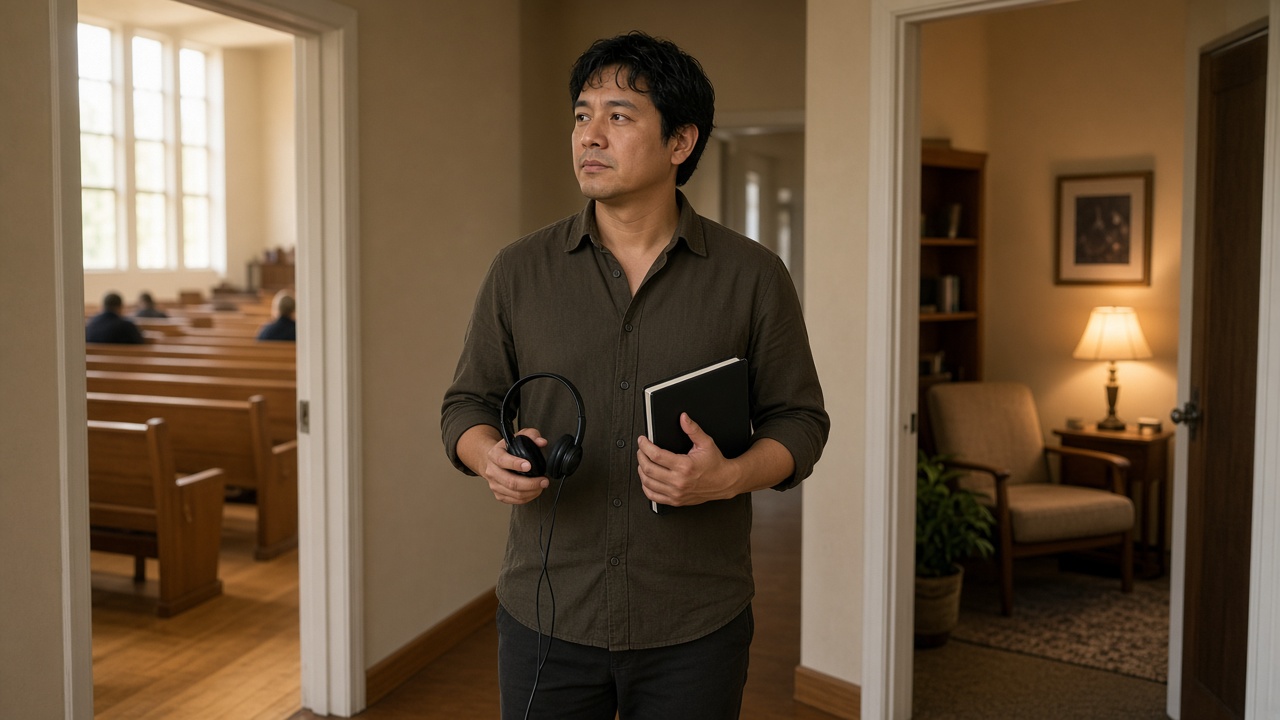
A paycheck does not change the design
The unpaid version of this story is already familiar. Churches notice a family that cannot follow English, remember who speaks Spanish or Korean, and ask a favor. The favor becomes the ministry. That pattern has a name and a breaking point: why church volunteer interpreters burn out.
The paid version looks more responsible. The church did not “borrow Maria.” It posted a role, interviewed, and put language on a W-2. From the platform, that feels like progress. From the pew, it is often the same design: access still depends on one body being in the right chair.
Speaking two languages is not the same work as interpreting a live sermon. It is also not the same work as pastoring in that language. A hire can be excellent at one of those jobs. Churches routinely buy the job title and then assign all three.
What the posting actually purchased
Picture an English-speaking suburban church—an example, not a customer story. The board funds a part-time bilingual associate. The description says “help us reach Spanish-speaking neighbors.” By month two, the calendar looks like this:
Sunday interpretation. Thirty to forty minutes of preaching, plus announcements, plus the next-step invite. If the associate interprets, they do not worship. If they preach in English, nobody is interpreting.
The unplanned extras. A parent asks about children’s ministry in Spanish. A guest needs the connect card explained. Someone wants prayer after the blessing. The hire is the person who “does language,” so all of it routes to them.
Weekday care. A hospital visit, a funeral conversation, a membership interview, a flyer that should have been in Korean. Print translation is not live interpretation. Pastoral care is not a booth. The same name still gets both.
The languages that were never in the posting. A Vietnamese-speaking grandmother sits with her daughter. A Portuguese-speaking couple visits from the new apartment block. The hire is fluent in Spanish. The room treats that as multilingual.
You did not buy a language strategy. You bought one schedule in one language, plus a quiet expectation that every other language need will wait.
The three jobs churches fuse onto one salary
Healthy multilingual churches separate work that hiring language tends to glue together.
Following the public hour is access. The sermon, the announcements, and the “join us next” have to be followable without booking the associate and without asking a guest to announce themselves as a problem. That is a systems job. It should work when the hire is out. First-time guests who cannot follow the hour rarely come back—and they will not know that the new staff member was covering a funeral.
Being a person in someone’s language is ministry. Greeting, sitting with a family, praying, explaining baptism, showing up at a hospital. Software does not do that. A bilingual hire is often the right person for this—if they are not already spent on the spoken hour.
High-stakes conversations still need a qualified human. Counseling, membership interviews, and legally sensitive meetings are not a caption problem. Do not ask an associate to be the booth, the greeter, and the pastor in the same morning. If you are weighing a human voice against an overlay for a given public hour, start with live translation vs a human interpreter.
When those jobs stay fused, the church gets none of them well. The hire cannot shepherd. The guest cannot count on next week. The elders think language is “staffed.”
One language is not the neighborhood
A bilingual hire is usually a one-language decision. Neighborhoods are not.
The languages that live around the building are often wider than the one the board can name. That is the gap in what languages your church neighborhood speaks: Sunday is a sample, not a census. Hiring for Spanish can be wise. Treating Spanish as the only other language in the ZIP is how a church spends a salary and still misses the Korean grandmother already in the pew.
Mixed households make the one-language hire even thinner. A teenager who thinks in English can sit with a parent who thinks in Spanish—until the associate is the only path to the sermon, and then only in one language, and then only when they are free. Overlay translation keeps a family in one pew. A staff member who has to choose which language to stand in cannot.
If the deeper question is whether this English hour should carry other languages at all—or whether a Spanish, Korean, or Mandarin congregation needs its own shepherds—that is a different decision: Spanish service vs live translation. Hiring a bilingual generalist is often the move churches make when they have not yet chosen either model. It feels like both. It is neither.
When a bilingual hire is the right move
Hire the person when you are hiring a minister, not a booth.
A bilingual pastor, deacon, or group leader is the right line item when people need care, teaching, and belonging in that language—not only a feed of the English sermon. That is church planting math, or at least midweek discipleship math. Compare it to calling a shepherd. Do not compare it to a monthly translation plan.
A bilingual hire is also the right move when you already know what you will not ask them to do. Write it down:
- They will not be the only way a guest can follow Sunday.
- They will not interpret the public hour and then stay for every lobby conversation in that language.
- They will not be the backup for every language the posting did not name.
- They will have a Sunday in which they can listen.
If you cannot publish those limits, you are not hiring a minister. You are buying a more expensive version of “Maria can do it.”
The hire who is called to plant or to pastor in Spanish should spend Sunday with the people they are called to, not in a chair translating someone else’s hour. The hire who is called to English-language staff work, and happens to be bilingual, should not inherit an invisible second job because the resume mentioned Spanish.
Split access from presence—on purpose
The useful sequence is narrower than a new org chart.
Put the public hour on a system. The spoken service should be followable in more than one language without a particular staff body in a particular seat. That is live sermon translation: one speaker, listeners choosing a language, access that survives a vacation week.
Keep the hire for presence. Let them greet, pray, follow up, and walk people toward baptism or a group. That is the work a salary can actually buy. It is also the work guests remember after they could follow the hour.
Name the third job and staff it separately. Counseling and membership interviews still need a qualified human interpreter when the pastor and the member do not share a language. Do not fold that into “the bilingual person will handle it.”
Churches that skip the first step keep losing unexpected visitors. Churches that skip the second step get a followable hour and still feel cold. Churches that skip the third step put pastoral weight on a tool—or on a staff member—that should not carry it.
Where live translation belongs
Live translation is the overlay that makes the hour you already run followable. The pastor still preaches once. Listeners follow in their language. It is not a second congregation, and it is not a substitute for bilingual pastoral care.
Hope Translator is built for live transcription and translation of speech—on the web and in the mobile apps—with broadcast (one speaker, many listeners) and solo / conversation (one-to-one) modes. A greeter or tech volunteer can host. People scan a QR code or open a link, pick a language, and read captions, listen to an AI voice, or both. They do not create an account.
That is the right tool when the people who need another language are already in the room—or might walk in speaking a language your hire does not. It is the wrong tool when what they need is a church that lives in their language all week.
Cost is not the moral argument, but it is why boards treat a hire as the cheaper-looking “real” solution. Published ranges for a human interpreter are $50–$200+ per hour, per language, often with 2–4 hour minimums. A bilingual salary is a different, larger line: benefits, a real job, one language. Hope Translator’s published entry benchmark is $20/month for 5 hours. Confirm current tiers on pricing. A plan will not pastor anyone. It can stop asking your new hire to miss worship so that anyone else can have it.
Hire the minister. Build the system.
If language access disappears when one staff member takes a Sunday off, you do not have a language ministry. You have a person you have not yet lost—only now you are paying them.
Thank them. Narrow the job to the ministry they were actually called to. Put the public hour on a system that does not require their body in a chair. Then let the hire do the human work a machine cannot do: remember a name, sit at a table, and—if a language community is forming—help you decide whether a second-language service is the next calling, not a substitute for this Sunday.
Ready to make the hour followable without parking it on one staff calendar? Start a session at hopetranslator.com or compare plans on pricing.