Your Church Website Is a Language Filter Before Sunday
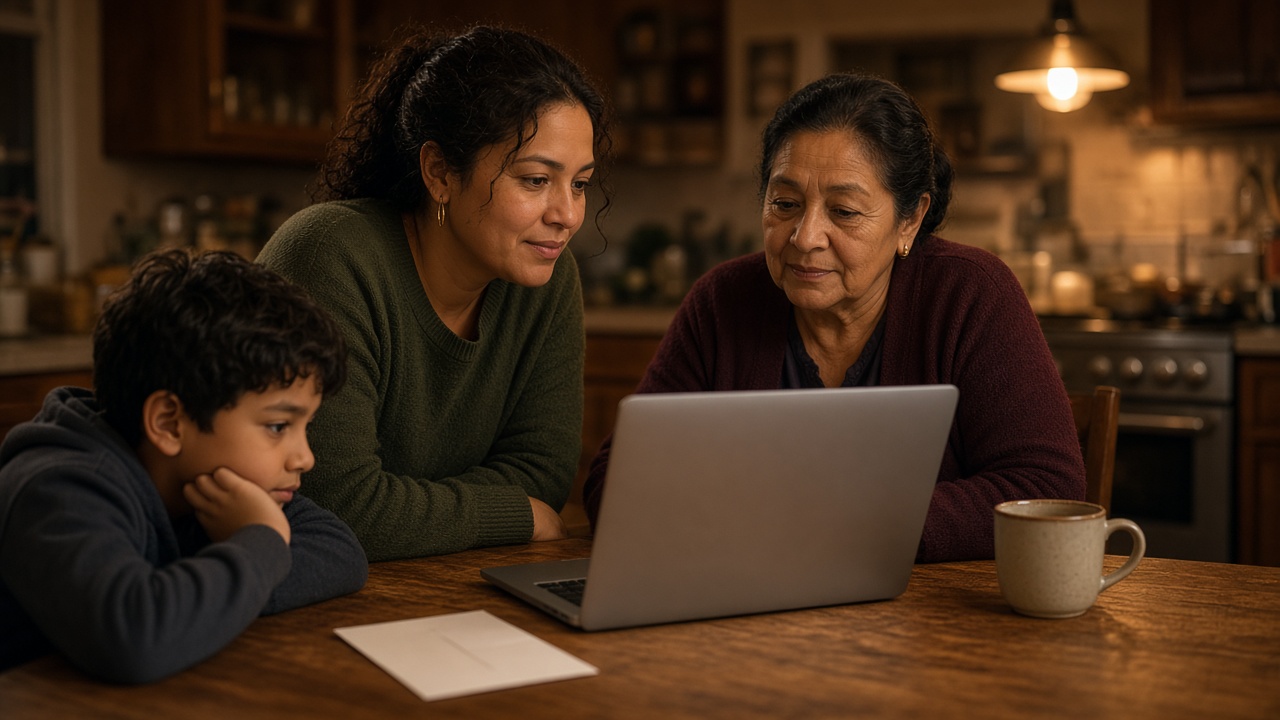
It is Saturday night. A mother opens your church website on a laptop. Her mother sits beside her. A child waits to hear whether tomorrow is “their” church or another search. The greeters are not in the room. The sermon has not started. The visit is already being decided.
The page is kind. Service times. A smiling photo. “Plan your visit.” Every sentence is in English. The grandmother cannot use those sentences. The family closes the tab.
You will never count them as first-time guests. First-time guests who cannot follow the hour rarely come back. This is the earlier version of the same problem: they never come, because the website already told them the hour is not for them.
This is not a tutorial for translating a site. It is the hospitality problem that happens before anyone parks.
The lobby is not the first door
Leaders measure welcome by what happens after someone finds a seat. Guests start earlier. They search the church name, a neighborhood, or “church near me Spanish.” They land on a homepage, a visit page, or a livestream tab. That screen is the first greeter.
If the screen only speaks the pulpit language, the building can be warm and the neighborhood already multilingual. The languages around the church do not appear on the page that is supposed to invite them.
Picture an English-speaking suburban church—an example, not a customer story. The visit page answers parking, dress, and kids check-in. It does not say what language the gathering uses. It does not say whether a guest can follow the sermon in another language. It does not say whether children’s ministry is English-only. A bilingual teenager in the household can decode the page. The adult who thinks in another language cannot tell whether the hour will include them.
From the office, the site looks finished. From the kitchen table, it looks like a locked door with a friendly photo on it.
What an English-only site actually hides
The filter is not rudeness. It is missing answers.
Whether the gathering is followable. “Join us Sunday at 10:00” is not the same sentence as “the sermon can be followed in Spanish, Korean, or Portuguese.” A guest who cannot use English is not asking for a marketing paragraph. They are asking whether the hour will be silence.
Whether the children will be stranded. Parents decide the visit for the whole household. If kids church is English-only, that is a first-Sunday filter of its own—see English-only children’s ministry. Hiding that fact on the website does not make the hallway kinder. It only delays the disappointment until check-in.
How to ask a human question. A contact form that only accepts English, a phone tree that only speaks English, and a “text the church” number with no language named all say the same thing: questions in another language are extra work. Many people will not send the extra work.
Who the church expects. Photos, ministry names, and “what to expect” copy teach guests which households already belong. None of that has to be hostile. An English-only visit page is enough to tell a mixed-language family they will be translating the morning for each other.
Browser translate is not a substitute for those answers. A guest can run the page through a text tool and still not know whether Sunday itself can be followed. Text tools are built for short phrases and websites, not for a live sermon. That split—reading a page versus following a spoken hour—is the whole point of Google Translate vs live speech translation.
The opposite error: a translated page that Sunday cannot keep
Churches that notice the website problem sometimes fix the wrong half.
They add a language toggle. They machine-translate the visit page. They put “Bienvenidos” on the homepage. Then Sunday is still an English hour with no overlay, no interpreter, and a kids wing that cannot explain pickup. The site promised hospitality. The building delivered a performance the guest could not join.
That is not a small mismatch. It is bait. A family that trusted the Spanish visit page will remember the hour they sat through, not the toggle they clicked on Saturday. They will not come back to discover that you meant the website was multilingual.
Clarity is kinder than a translated banner over an English-only Sunday.
Name the language of the gathering. If the service is in English, say so in the languages people actually speak. Then say what else is true: live captions, a second voice, a QR code, a Spanish service at 1:00, or none of those. Guests can work with an honest English hour. They cannot work with a surprise.
Do not imply a second-language church you do not have. A Spanish visit page for an English service is useful when it tells the truth. It is harmful when it reads like a Spanish congregation. Overlay translation and a second-language service are different ministries; that decision lives in Spanish service vs live translation. The website should not collapse them.
Do not advertise kids ministry you cannot staff in that language. If the classroom is English, the translated visit page should say the classroom is English. Parents would rather know on Saturday than at the sticker printer.
The Saturday-night questions the visit page must answer
A first-time guest is not looking for your vision statement. They are trying to finish one decision: can our household sit through this hour without someone being lost?
Those questions are few.
What language is the service? Write it. Do not assume the domain name or the pastor’s photo answers it.
Can I follow the spoken hour in another language? If yes, say how—phone, captions, audio, which languages you actually run, and that a guest does not need to book a person. If no, do not hide the no behind a stock “all are welcome.”
What language is kids church? The hallway is a second service. Treat it like one.
Who can I contact in my language? A name, a WhatsApp number, or an email that a human will answer beats a generic form. If nobody on staff can reply in that language, say when a reply will come and in which language. Silence after a Spanish message is also an answer.
You do not need forty languages on the site. You need the two or three your neighborhood already speaks, written clearly, matching what Sunday can keep.
Where live translation fits—and what it does not do
Live translation does not translate a website. Do not ask it to. Pages, forms, and sermon archives are a text job. A bilingual member, a reviewed draft, or a church-site tool can do that work. Hope Translator is not that tool.
Live translation is the overlay that makes the spoken hour followable once someone is in the room—or watching the livestream.
Hope Translator is built for live transcription and translation of speech—on the web and in the mobile apps—with broadcast (one speaker, many listeners) and solo / conversation (one-to-one) modes. A tech volunteer or greeter can host. Guests scan a QR code or open a link, pick a language, and read captions, listen to an AI voice, or both. They do not create an account.
That is the right tool for the sermon and the announcements. It is the wrong tool for the about page, the giving form, or a membership interview.
The website’s job is to tell the truth about that overlay before Saturday night ends.
If the hour is followable, put the join path on the visit page: a short sentence in the guest’s language, and the same QR or link you will show in the lobby. A guest who already has the link in their phone is not asking a stranger for help at 10:02. If the hour is not followable yet, do not put a language toggle on the homepage and hope the lobby improvises.
Use a qualified human interpreter for counseling, membership, and other high-stakes conversations. Speech translation will not visit a hospital or walk someone through baptism. Do not ask software to be a shepherd, and do not ask a visit page to pretend you have one.
Cost is not the main argument here, but it is why churches translate a page and stop. Published ranges for a human interpreter are $50–$200+ per hour, per language, often with 2–4 hour minimums. Hope Translator’s published entry benchmark is $20/month for 5 hours. Confirm current tiers on pricing. A plan will not make a website honest. It can keep the Sunday you describe on that website from being silence.
A Saturday-night test for leaders
Before you buy a site plugin or a translation plan, open your visit page as a guest who does not speak the pulpit language. Use a browser translate if you want. Then ask only what that guest can actually learn.
- Can they tell what language the gathering uses?
- Can they tell whether the sermon is followable in another language—without emailing the office?
- Can they tell the language of kids church?
- If they send a message in that language, does anyone answer?
- If they believe the page and come, will Sunday keep the promise?
If the honest answers are no, the problem is not that your communications team is unfriendly. The problem is that hospitality starts on a screen you do not watch, and ends before the greeter speaks.
Fix the page so it tells the truth. Fix the hour so the truth is worth telling. Then keep doing the human work software cannot do: answer the Saturday message, remember a name, and—if a language community is forming—ask whether a second-language service is the next calling, not a substitute for an honest website.
Ready to make the Sunday you describe on the visit page actually followable? Start a session at hopetranslator.com or compare plans on pricing.